


Every merchant account is assigned a merchant category code (MCC), a four-digit number that tells the card networks what kind of business you run. Some codes are treated as high-risk, which affects approval, pricing and how closely your account is monitored. Here are the codes that most often get extra scrutiny, with a page for each.
Codes that need card network registration
For card-not-present sales, card networks require merchants in certain categories to register before they can accept cards. Your processor handles the registration, which usually means extra documents and fees.
- MCC 5122: Drugs, drug proprietaries and druggists' sundries
- MCC 5912: Drug stores and pharmacies
- MCC 5962: Direct marketing, travel-related arrangement services
- MCC 5966: Direct marketing, outbound telemarketing
- MCC 5967: Direct marketing, inbound teleservices
- MCC 5993: Cigar stores and stands
- MCC 7273: Dating services
- MCC 7995: Betting and gambling
Other codes that get extra scrutiny
- MCC 4722: Travel agencies and tour operators
- MCC 4816: Computer network and information services
- MCC 4829: Wire transfers and money orders
- MCC 5734: Computer software stores
- MCC 5816: Digital goods, games
- MCC 5933: Pawn shops
- MCC 5944: Jewelry, watch, clock and silverware stores
- MCC 5968: Direct marketing, continuity and subscription
- MCC 5969: Direct marketing, other
- MCC 5999: Miscellaneous and specialty retail
- MCC 6051: Quasi-cash, including foreign currency and cryptocurrency
- MCC 6211: Security brokers and dealers
- MCC 7322: Collection agencies
- MCC 8299: Schools and educational services
- MCC 8999: Professional services
What your MCC changes
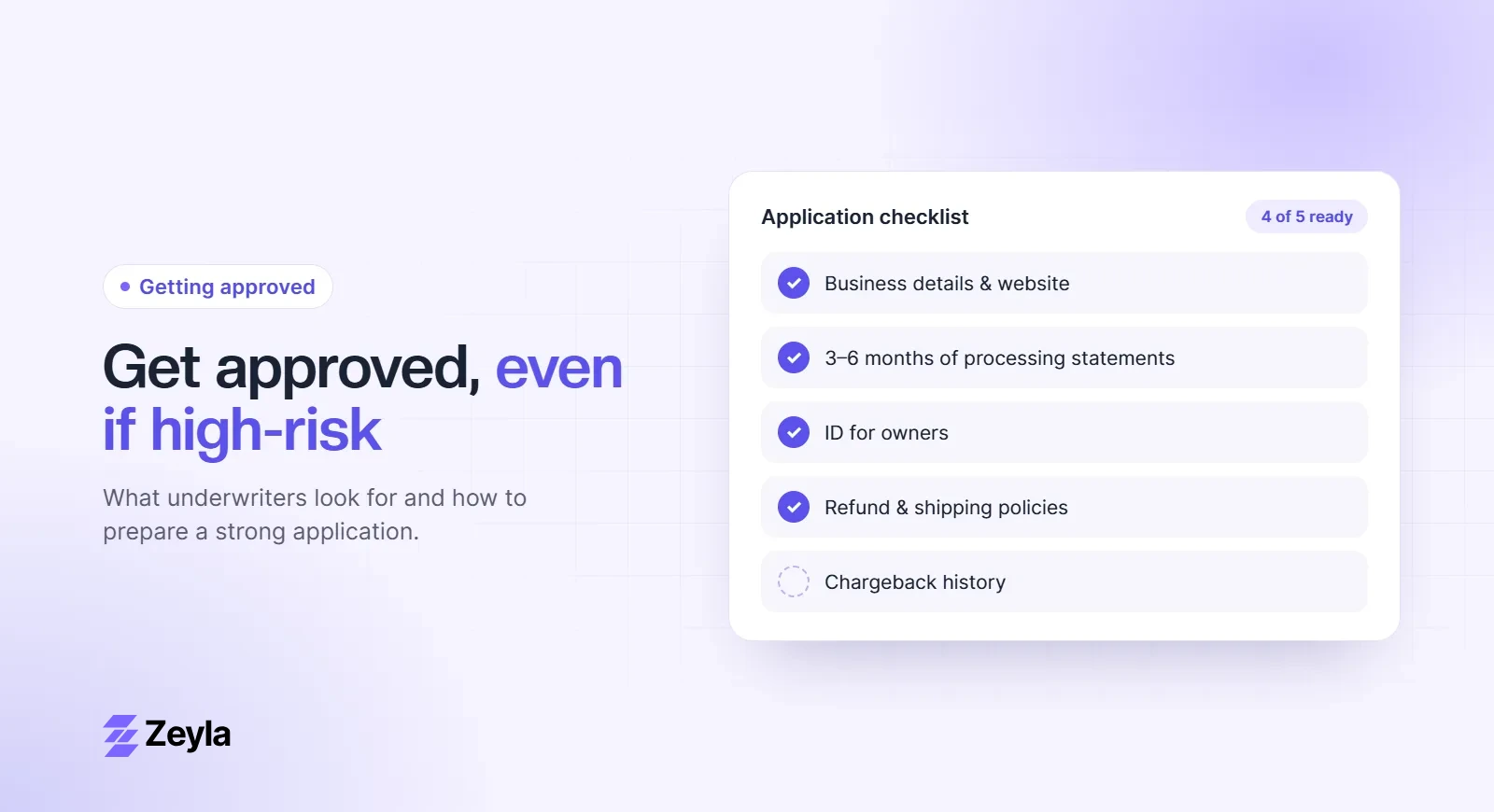
- Approval: high-risk codes get more detailed underwriting. Prepare with the approval checklist.
- Pricing: some interchange rates depend on the MCC, and processors price risk into their markup.
- Monitoring: dispute and fraud levels are watched more closely. Check yours with the chargeback ratio calculator.
- Customer statements: some card issuers block or limit purchases in certain codes, such as gambling.
Why the right code matters
Your processor assigns your MCC based on how you describe your business. A code that understates your risk might get you approved faster, but it breaks card network rules. When the mismatch is found, accounts are often closed with funds held, and the business can end up on the MATCH list. It's much safer to be accurate and work with a provider that underwrites your real category.
Frequently asked questions
How do I find my MCC?
Check your merchant statements or processor dashboard, or ask your processor. It's usually listed near your merchant ID.
Does a high-risk MCC mean I'll be declined?
No. It means more questions and possibly different terms, such as a rolling reserve. Many businesses in high-risk codes process cards successfully with the right provider.
Not sure where you stand?
Take the free high-risk quiz, browse industries we support, or apply in about 3 minutes and a Zeyla specialist will review your business.