


Paddle works differently from a normal payment processor. As a merchant of record, Paddle is the legal seller of your product to your customers. That's what lets it handle sales tax and VAT for you, but it also means Paddle has the final say on what it's willing to sell. When it decides your product no longer fits, it can suspend your account.
Zeyla is an independent payment processing company and is not affiliated with Paddle.
Why Paddle suspends accounts
Your product falls under its acceptable use policy
Paddle publishes an acceptable use policy listing products and practices it won't sell, and says the list is kept under review. A product that was accepted at sign-up can fall outside it later, either because the policy changed or because your product did.
Verification or domain issues
Paddle checks your domain, business details and identity. If something doesn't match, or your website changes significantly, selling can be paused until it's checked again.
Refunds, disputes or fraud
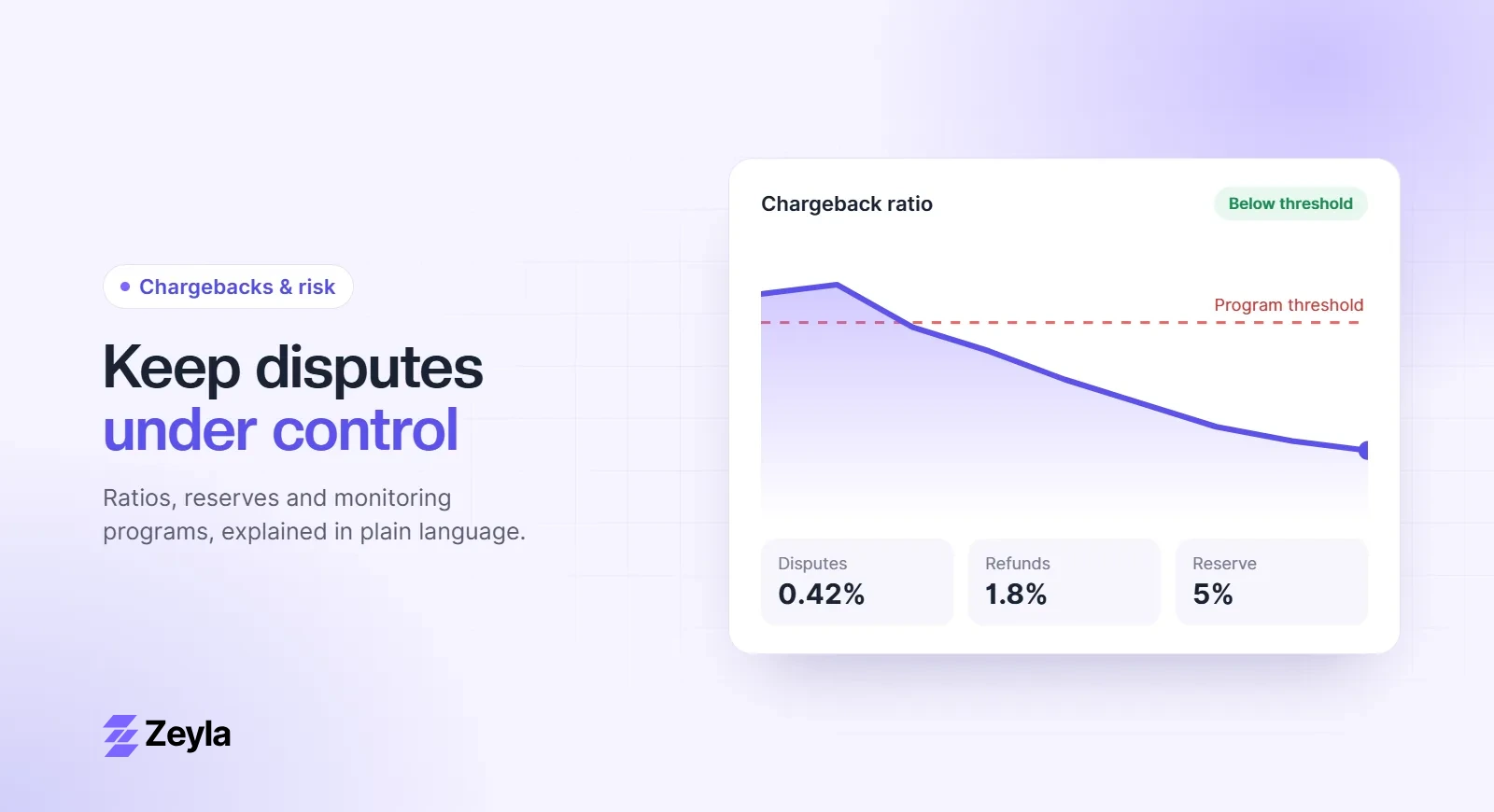
Because Paddle is the seller, it carries the cost of refunds and chargebacks. A spike in either is a common reason for a review.
Closer screening across the industry
In June 2025 the U.S. Federal Trade Commission announced a $5 million settlement with Paddle over payments it processed for deceptive tech-support schemes. The order requires Paddle to screen and monitor its sellers more closely. In practice, merchant of record platforms now look harder at products in grey areas.
What to do now
- Read the notice carefully. Check whether selling is suspended, payouts are held, or both, and what Paddle is asking for.
- Answer every question in full. Describe your product plainly, with screenshots or a demo if asked.
- Fix anything you can. Remove unsupported products or claims, and update your website and policies.
- Export your data. Download customer, subscription and transaction records.
- Ask about your payouts. Ask when held funds will be paid and what they're being held against.
How to avoid it next time
If your product sits near the edge of a merchant of record's policy, you'll always be exposed to changes you can't control. Two ways to lower that risk:
- Get written confirmation from any platform that your exact product is allowed before you build on it.
- Use your own merchant account. With your own account, your business is the seller and your terms are agreed up front. You handle sales tax yourself, usually with tax software, but your payments don't depend on a platform's list of what it will sell. See our Paddle alternative for high-risk businesses.
Frequently asked questions
Will Paddle pay out my remaining balance?
Usually, after deducting refunds and disputes, but timing depends on your situation. Ask Paddle directly and keep a written record.
Can I switch to Stripe after a Paddle suspension?
Only if your product fits Stripe's policies. If Paddle suspended you for the type of product you sell, other general-purpose platforms may reach the same decision.
Talk to a specialist
Zeyla reviews software, subscription and digital-product businesses, including those in restricted categories. Apply in about 3 minutes, or check if you're likely to be treated as high-risk.